


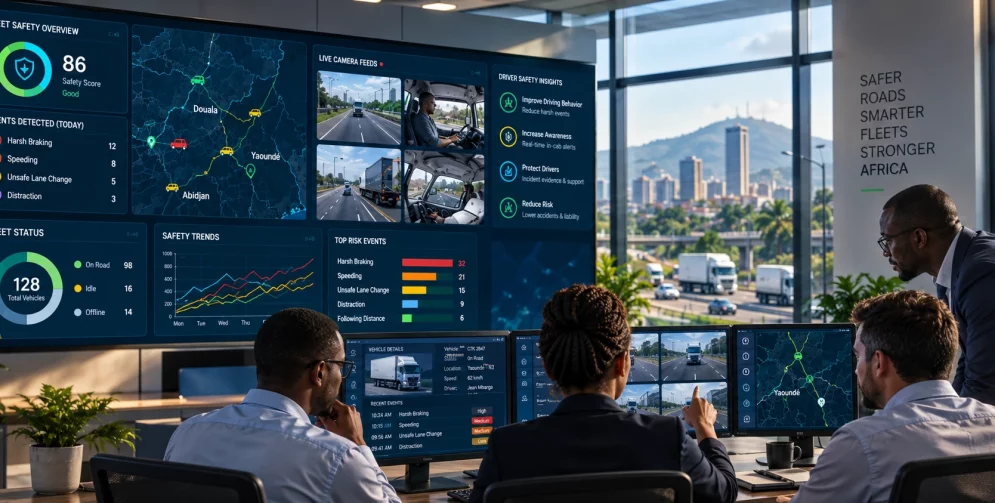
Fleet safety has become more complex than simply knowing where vehicles are located.
Modern fleet managers need to understand what is happening on the road, how drivers are behaving, and what caused an incident when something goes wrong.
This is where video telematics comes in.
By combining vehicle tracking, telematics data, and video footage, video telematics gives fleet managers a clearer picture of vehicle and driver activity. Instead of relying only on GPS location data or reports after an incident, businesses can use video and contextual data to identify risks, coach drivers, investigate collisions, and improve overall fleet safety.
For fleets operating delivery vehicles, trucks, service vehicles, buses, or other commercial vehicles, video telematics has become an increasingly important part of a modern fleet safety strategy.
What Is Video Telematics?
Video telematics combines video cameras with traditional telematics technology to provide both visual and vehicle data.
A conventional GPS fleet tracking system can tell you:
- Where a vehicle is
- How fast it is traveling
- Where it has been
- How long it has stopped
- Whether it has deviated from a route
Video telematics adds another layer of information by showing what happened around the vehicle.
Depending on the system, cameras may capture:
- Road-facing footage
- Driver-facing footage
- Side or rear views
- Events such as harsh braking
- Sudden acceleration
- Collisions
- Distracted driving
- Mobile phone use
- Unsafe following distances
- Speeding events
This combination of video + vehicle data + driver behavior data helps fleet managers understand not just what happened, but also the circumstances surrounding an event.
1. Provides Evidence During Accidents
One of the biggest advantages of video telematics is its ability to provide objective evidence after a collision.
Without video, determining what happened may depend on:
- Driver statements
- Witness accounts
- Photographs
- Police reports
- Vehicle damage
- Other available evidence
A camera recording can provide an additional source of information.
For example, footage may show whether:
- Another vehicle suddenly changed lanes
- A pedestrian entered the roadway
- A driver was distracted
- A vehicle stopped unexpectedly
- The fleet vehicle was following too closely
- A collision occurred at an intersection
This can help fleet managers conduct faster and more accurate incident investigations.
It can also help distinguish between preventable and non-preventable incidents.
2. Identifies Risky Driver Behavior
Driver behavior is one of the most important factors in fleet safety.
Traditional GPS tracking can identify events such as speeding, harsh braking, or rapid acceleration. Video telematics adds visual context to those events.
For example, a harsh-braking alert by itself tells you that the vehicle decelerated rapidly.
Video can help answer why.
Was the driver:
- Avoiding another vehicle?
- Approaching a sudden traffic hazard?
- Driving too aggressively?
- Distracted?
- Following too closely?
This context makes driver behavior monitoring much more useful.
Fleet managers can identify recurring patterns and use them to develop targeted safety interventions.
3. Enables Proactive Driver Coaching
A strong fleet safety program shouldn’t only react after accidents happen.
It should help prevent them.
Video telematics provides fleet managers with real-world examples that can be used during driver coaching.
Instead of telling a driver:
“You need to improve your driving.”
A manager can discuss a specific event and explain what happened, why it was risky, and what could have been done differently.
Driver coaching can focus on:
- Speed management
- Following distance
- Harsh braking
- Distracted driving
- Aggressive acceleration
- Lane discipline
- Intersection awareness
- Seat belt compliance
This creates a more data-driven safety culture.
The objective isn’t to monitor drivers simply for disciplinary purposes. It is to identify risks early and give drivers the information they need to improve.
4. Helps Detect Distracted Driving
Distracted driving can be difficult to identify through GPS data alone.
A vehicle’s location and speed don’t necessarily tell you whether a driver was looking at the road.
Depending on the capabilities of the system, AI-powered video telematics can identify behaviors such as:
- Mobile phone use
- Driver distraction
- Fatigue indicators
- Lack of attention
- Seat belt violations
- Unsafe driving patterns
When these events are detected, fleet managers can receive alerts or review recorded footage.
Early identification gives businesses an opportunity to coach drivers before risky behavior contributes to an accident.
5. Supports AI-Powered Safety Alerts
Modern video telematics systems increasingly use artificial intelligence to analyze video and identify potentially dangerous events.
Instead of requiring managers to manually review hours of footage, AI can prioritize important incidents.
Depending on the solution, alerts may include:
- Forward collision warnings
- Tailgating
- Lane departure
- Distracted driving
- Harsh braking
- Speeding
- Phone use
- Fatigue-related behavior
This can significantly improve the efficiency of fleet safety monitoring.
Rather than watching every minute of recorded video, managers can focus on events that require attention.
6. Reduces Accident-Related Costs
Fleet accidents can create costs far beyond vehicle repairs.
A single incident can potentially involve:
- Vehicle repair
- Driver downtime
- Lost productivity
- Insurance claims
- Legal expenses
- Third-party damage
- Replacement vehicles
- Administrative work
- Reputational damage
Preventing even a small number of serious incidents can therefore have a meaningful financial impact.
Video telematics supports accident prevention by helping businesses identify risky behavior and intervene before incidents occur.
It also provides evidence that can help businesses understand recurring accident patterns and improve their safety policies.
7. Improves Fleet Insurance and Claims Management
Insurance claims can become complicated when there is limited evidence about what happened.
Video footage can provide valuable context during the claims process.
For example, recorded footage may help establish:
- The sequence of events
- Road conditions
- Vehicle movements
- Driver behavior
- Actions of other road users
This can make incident investigations more efficient.
Some insurers may also consider telematics and safety technology when evaluating fleet risk, although insurance requirements, discounts, and eligibility vary by insurer and location.
Businesses should therefore speak directly with their insurance provider before assuming that video telematics will automatically reduce premiums.
8. Helps Protect Drivers From False Claims
Fleet operators don’t only need to protect their vehicles.
They also need to protect their drivers.
A driver may be involved in an incident that was not their fault. Without reliable evidence, determining responsibility can become difficult.
Video footage can provide an objective record of the event.
This can help businesses investigate disputed incidents and protect drivers when evidence shows that another road user was responsible.
For fleet managers, having reliable incident footage can provide greater confidence when handling complaints, claims, and disputes.
9. Creates a Stronger Fleet Safety Culture
Technology alone doesn’t create a safe fleet.
People do.
Video telematics can support a safety culture by making safety measurable and actionable.
Fleet managers can use safety data to:
- Identify high-risk behaviors
- Recognize safer drivers
- Create driver coaching programs
- Track improvements
- Identify recurring risk locations
- Establish safety benchmarks
- Develop evidence-based policies
Over time, this can move fleet safety from a reactive process to a continuous improvement program.
Instead of discussing safety only after an accident, businesses can use ongoing data to make safety part of everyday fleet operations.
10. Combines Video With GPS and Telematics Data
Perhaps the biggest advantage of video telematics is that video doesn’t have to operate independently.
When integrated with GPS and telematics, businesses can connect multiple pieces of information.
For example:
GPS data:
Vehicle was traveling at 72 km/h.
Telematics data:
Vehicle experienced harsh braking.
Video:
A car suddenly entered the vehicle’s lane.
Together, these data points provide much more context than any individual data source.
This is why video telematics can be especially powerful when integrated into a broader fleet management system.
Managers can analyze location, speed, vehicle behavior, driver behavior, and video evidence within a connected platform.
How to Choose a Video Telematics System
Not every video telematics solution offers the same capabilities.
Before investing in a system, fleet operators should evaluate the following features.
Camera Coverage
Determine whether the business needs:
- Front-facing cameras
- Driver-facing cameras
- Rear cameras
- Multi-camera coverage
The right configuration depends on the type of fleet and the organization’s safety objectives.
AI Detection
Look for systems capable of identifying relevant safety events automatically.
The most useful alerts are those that are actionable rather than simply generating large volumes of notifications.
Real-Time Alerts
Real-time alerts can allow managers or safety teams to respond quickly when critical events occur.
GPS Integration
Video becomes more valuable when it is connected to vehicle location, speed, route, and other telematics information.
Cloud-Based Video Access
Cloud access can make it easier for authorized users to retrieve and review footage without physically accessing the vehicle.
Driver Privacy Controls
Businesses should also consider privacy, consent, data retention, access permissions, and applicable local regulations when deploying driver-facing cameras.
A successful video telematics program should improve safety while maintaining transparency and appropriate data governance.
Best Practices for Implementing Video Telematics
Simply installing cameras isn’t enough.
Fleet managers should establish clear policies around how the technology will be used.
1. Explain the Purpose
Drivers should understand that the primary objective is improving safety, reducing risk, and supporting incident investigations.
2. Establish Clear Policies
Define:
- What is recorded
- What events trigger alerts
- Who can access footage
- How long footage is retained
- How footage is used for coaching
- How serious safety violations are handled
3. Focus on Coaching
Use safety events as opportunities for improvement rather than relying exclusively on punishment.
4. Measure Results
Track KPIs such as:
- Collision frequency
- Preventable incidents
- Distracted-driving events
- Speeding events
- Harsh braking
- Driver safety scores
- Safety coaching completion
- Claims frequency
5. Review and Improve
Use the data to identify recurring problems and update training, policies, and fleet operations.
Key Benefits of Video Telematics at a Glance
Video telematics can help fleet operators:
- Improve driver safety
- Identify risky behavior
- Reduce distracted driving
- Support proactive driver coaching
- Investigate accidents
- Provide objective incident evidence
- Protect drivers against false claims
- Improve fleet visibility
- Reduce safety-related costs
- Build a stronger safety culture
The exact results will depend on fleet size, driver behavior, operating environment, technology capabilities, and how effectively the organization acts on the data.
Frequently Asked Questions
What is video telematics?
Video telematics is a fleet technology that combines vehicle telematics data with camera footage. It provides information about vehicle location, speed, driving behavior, and visual events occurring around or inside a vehicle.
How does video telematics improve fleet safety?
It helps fleet managers identify risky driving behavior, investigate incidents, provide targeted driver coaching, and use AI-powered alerts to identify potential safety events.
Is video telematics better than GPS tracking?
They serve different purposes. GPS tracking provides location and vehicle movement information, while video telematics adds visual context. Using both together can provide a more complete picture of fleet activity and safety.
Can video telematics detect distracted driving?
Depending on the system, AI-powered video telematics can identify certain forms of driver distraction, such as mobile phone use or attention-related behaviors. Capabilities vary by provider and camera configuration.
Can video telematics reduce fleet accidents?
It can contribute to accident reduction by identifying risky behaviors, enabling proactive driver coaching, and providing safety alerts. However, technology alone does not guarantee fewer accidents; training, policies, management practices, and driver engagement also matter.
Does video telematics protect drivers?
Yes. Recorded footage can provide objective evidence during disputed incidents and help establish what happened during a collision or other road event.
Is video telematics suitable for small fleets?
Yes. Small fleets can also benefit from better visibility into driver behavior, accident events, and vehicle activity. The appropriate system depends on fleet size, operating needs, budget, and desired safety features.